


Privacy Policy
How we handle your information
What the forms on this site collect, why we hold it, who can see it, what we can and cannot yet tell you about how long it is kept, and what you can ask us to do about it. Written from the code that runs the site rather than from a template.
Draft — not yet reviewed, and not yet complete
This notice was prepared alongside the build of this website. It describes what the site actually does, but it has not been reviewed by a solicitor or data protection adviser, and it must be before the site goes live.
Several details are still placeholders and are marked as such below: the legal entity and its registered address, the company registration number, the ICO registration number, how long records are kept, where they are hosted, and which suppliers will handle enquiries once email and customer records are set up. The lawful bases set out below are reasoned positions that the business needs to confirm, not settled ones.
Until those are answered, please read this page as a statement of intent about a site that is still in build.
Last updated:
This notice explains what happens to information about you when you use this website, send us an enquiry, or sell us equipment. It is written to be read, so it avoids restating the legislation where plain English will do.
The short version: we collect what you type into one of two forms, plus any equipment list or photographs you choose to attach. We use it to answer you and to do the work you asked for. It is not sold, and it is not used to advertise to you. The site sets no cookies and runs no analytics — see our cookie policy for how that was checked.
Who is responsible for your information
The data controller — the organisation deciding what happens to your information and answerable for it — is the business behind this website. Its details are below.
- Registered name (the controller)
- Debsten Ltd
- Trading name
- Deberytech
- Registered office
- 66 Paul StreetLondonEC2A 4NAEngland
- Company number
- 17381245
- Telephone
- 020 3411 1951
- ICO registration
- To be confirmed
Placeholder. The details above are stand-ins used while the site is being built. The full legal entity name, its registered office and its registration numbers must replace them before launch, and the ICO registration number must be added.
What we collect
Everything we hold about you, you gave us: there is no tracking on this site, and nothing is bought in from anywhere else. There are two forms, and they collect different things.
Sell your IT equipment
The longer form, used to get a quote for equipment. See it.
- NameRequired
- Required. Who we are replying to.
- Company
- Optional.
- Email addressRequired
- Required. The address we reply to.
- Phone number
- Optional.
- Location or postcode
- Optional. Used to work out collection.
- Types of equipmentRequired
- Required. One or more from a fixed list.
- Quantity
- Optional, free text.
- Make and model
- Optional, free text.
- Condition
- Optional. One of four set answers.
- Whether data wiping is needed
- Optional. One of four set answers.
- Additional information
- Optional, free text. Whatever you choose to tell us.
- Equipment list or photographs
- Optional. Up to ten files, 4MB in total. See the section below.
Contact form
The short form, for a general question. See it.
- NameRequired
- Required.
- Company
- Optional.
- Email addressRequired
- Required.
- Phone number
- Optional.
- Subject
- Optional. One of four set answers.
- Your messageRequired
- Required, free text. Whatever you choose to tell us.
Alongside whichever form you used, we record the date and time you sent it, a reference number so we can both refer to it, and an internal status showing where the enquiry has got to. Nothing else is recorded automatically alongside your submission. Separately from that record, the server that hosts the site may keep ordinary request logs, as described under keeping it safe below.
Neither form asks for bank details, card details or identity documents, and neither has a field to put them in. Please do not send them through the website.
If you email us or ring us instead, we hold whatever you choose to tell us in that email or on that call, in the same way and for the same reasons.
Worth knowing
Equipment lists carry more than equipment
You can attach a spreadsheet or photographs to a sell enquiry — up to ten files. It is the most useful thing you can send us, and it is also the part of your enquiry most likely to contain information about people.
None of this stops you sending a list. It is simply worth a look before you attach it: if a column is not needed for us to price the equipment, you are free to delete it first, and we would rather you did.
Serial numbers
Almost every equipment list carries them, and a photograph of a machine very often catches the label on the base or the rear panel. A serial number identifies one specific device for the rest of its life, and it is the key that ties a machine to a warranty record, a support case and, in your own systems, to a person.
Asset tags and internal references
Your own numbering, cost centres, site codes and sometimes the department a machine sat in. On its own it means little outside your organisation. Combined with a serial number it can be enough to identify who used the device.
Names of the people who used the equipment
Asset registers exported straight from an IT system routinely include an assigned user column, and photographs sometimes catch a sign-in screen, a labelled machine or a desk. That is personal data about your colleagues, and you are the one deciding to send it to us.
The file name itself
Spreadsheet and photograph file names often carry a site name, a project name, a date or a person's name. We store the file under a cleaned-up version of the name you gave it, so whatever is in that name comes with it.
Where a list you send us names your own colleagues, you remain responsible for that information as the organisation that decided to share it. We treat it as part of your enquiry, use it only to price and arrange the collection, and will delete it on request.
Purposes
Why we hold it, and what allows us to
UK data protection law only permits information to be used where there is a lawful basis for it. Below is each thing we do with your information, the basis we consider applies, and the reasoning behind it.
Replying to you and preparing a quote
Steps prior to a contract, or legitimate interests
You asked us for a price, so we have to read what you sent and come back to you. Where you are selling equipment as an individual, handling your details is part of taking steps at your request before any agreement is made. Where you are a contact at a company, the deal would be with the company rather than with you, so we rely instead on our legitimate interest in speaking to the person who got in touch.
Assessing, valuing and buying the equipment
Performance of a contract, or legitimate interests
Once a price is agreed we need your details to arrange collection, confirm what was taken and pay you. Same distinction as above: if the agreement is with you personally it is contract, and if it is with your employer it is our legitimate interest in administering an agreement with that business.
Wiping data-bearing equipment where that has been agreed
Performance of a contract
If you ask us to wipe drives, we handle the devices and whatever is still on them in order to do the work you asked for. That is a different relationship from the rest of this notice and it is dealt with separately below.
Keeping records of what we bought and from whom
Legal obligation, and legitimate interests
Some records have to be kept because the law says so — tax and accounting records being the obvious ones. Beyond that we keep enough of a history to answer a later question about a specific collection, which is our own legitimate interest in running the business properly.
Keeping this website working and free of abuse
Legitimate interests
Both forms carry a hidden field that a real visitor never sees. If it is filled in, the submission is treated as automated and discarded rather than stored. The server that serves these pages may also keep ordinary technical logs of the requests it receives. Neither is used to build a picture of you.
Dealing with a complaint, dispute or legal claim
Legitimate interests, and legal obligation
If something goes wrong we need to be able to look back at what was said and what was collected. Where a regulator, a court or another legal duty requires us to produce information, we comply with that.
To be confirmed. The bases above are reasoned positions taken while the site was being built. They must be confirmed with a qualified adviser before launch, along with which record-keeping obligations apply once equipment has been bought and paid for.
We do not use your information for marketing. There is no newsletter sign-up on this site, no mailing list, and you will not be added to one because you asked for a quote.
Your rights
What you can ask us to do
UK data protection law gives you rights over information about you. Which of them apply in a particular case depends on why we are holding it, so rather than promise all of them in all circumstances, here is what each one is.
Access
Ask whether we hold information about you, and get a copy of it. We have one month to respond, and we do not charge for it.
Rectification
Have anything inaccurate corrected, and anything incomplete filled in. A misspelled name or an old phone number counts.
Erasure
Ask us to delete what we hold. This is not absolute — where we are required to keep a record, we will say so and explain why rather than quietly keeping it.
Restriction
Ask us to pause using your information while something is being checked or a disagreement is resolved, instead of deleting it outright.
Objection
Object to us using your information where we rely on legitimate interests. We then either show a good enough reason to continue or stop.
Portability
Where the handling is automated and rests on consent or on a contract with you, ask for a copy in a common machine-readable format.
Automated decisions
Rights around decisions made about you by a computer alone. Nothing on this website makes such a decision — every enquiry is read and priced by a person.
Complaining to the regulator
Raise it with the Information Commissioner's Office at any time. You do not have to come to us first, though we would rather you did.
To use any of them, email us at info@deberytech.co.uk or write to the address at the top of this page, and tell us what you would like. Quoting your enquiry reference — the code beginning ENQ or MSG that we showed you when you submitted the form — makes it far quicker to find. We may need to check who you are before we hand over a copy of anything, which is a protection for you rather than an obstacle.
There is no charge, and we will respond within one month. If a request is genuinely complicated we may need longer, in which case we will tell you why inside that first month rather than going quiet.
If you are not happy with our answer
Tell us, and we will look at it again. You also have the right to complain to the Information Commissioner’s Office (ICO), the UK’s independent regulator for data protection. Their website is ico.org.uk and they have a helpline. You can go to them directly without raising it with us first, and doing so does not affect anything else between us.
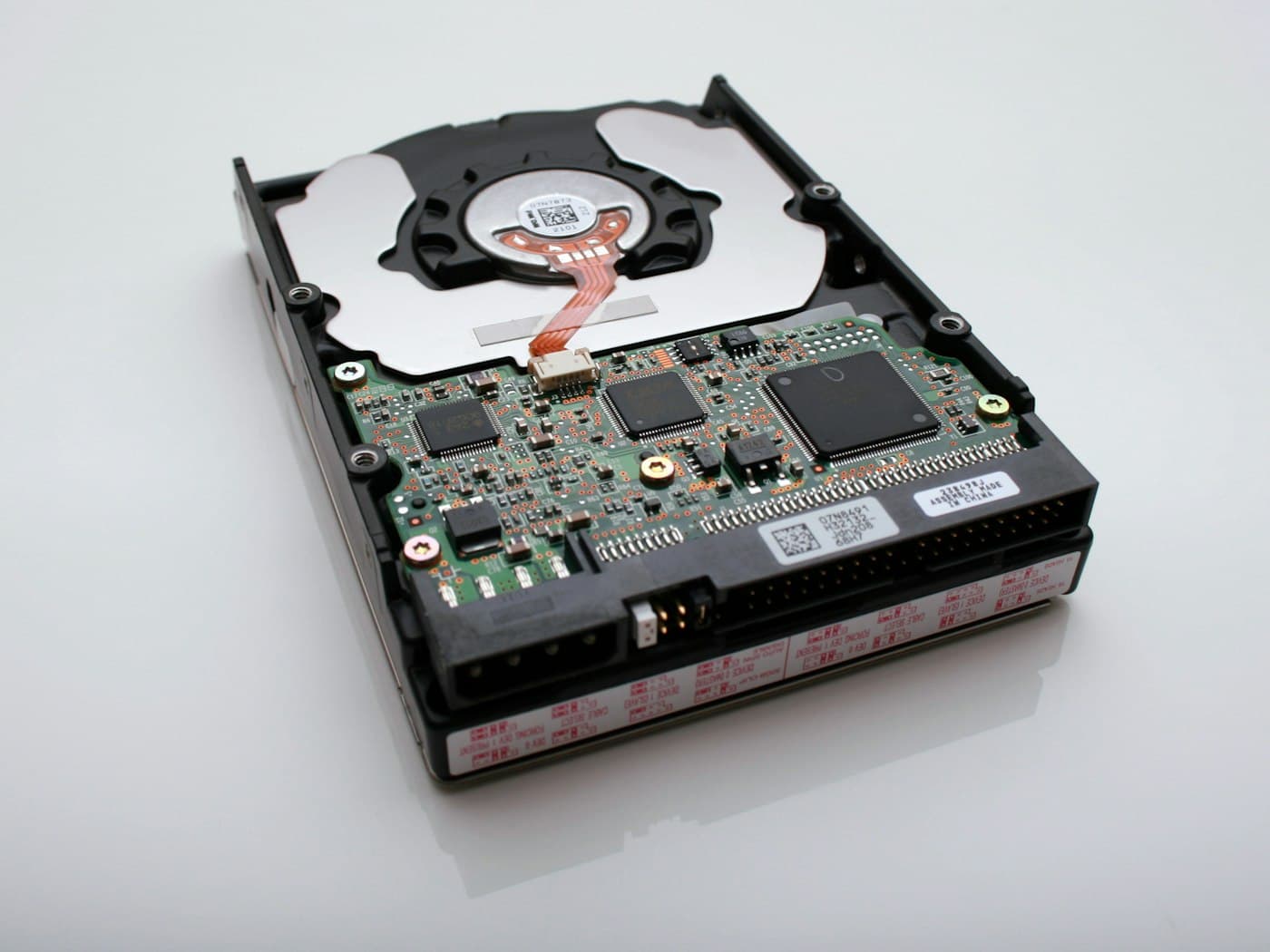
A separate matter
Your own data on equipment you sell us
Everything above is about information you send us about yourself. This is about something different and more important: the data sitting on the drives inside the equipment. It is not covered by the rest of this notice, and the responsibility for it starts with you.
Before a collection
Until the equipment is with us, what is on it is entirely in your hands. Five things are worth doing:
- Take your own copy of anything you still need. Once a drive is wiped it is not coming back, and that is the point of wiping it.
- Sign out of accounts on the device and remove it from any account that is linked to it, including activation locks and “find my device” features.
- Release the device from mobile device management or remote enrolment. A machine that is still enrolled may be unusable to anyone else and can be impossible for us to buy.
- Take out SIM cards, memory cards and anything else that is not part of the machine, along with any recovery keys or paperwork stored with it.
- Tell us if you know a device holds anything sensitive, so it can be handled accordingly rather than discovered later.
If you would like the drives wiped rather than doing it yourself, that is a service we offer and it is set out on the data wiping page. What is done, and where, is agreed with you before anything is collected.
What wiping does not cover
Worth being plain about, because the word is often heard as more than it means. Erasing a drive deals with that drive.
It only reaches the equipment we receive
Wiping a laptop does nothing to the copies of the same files sitting in a cloud account, on a backup, on a colleague's machine, in an email archive or in a filing cabinet. If those matter, they are yours to deal with separately.
It happens after the equipment leaves you
Unless wiping is carried out at your own premises, there is a period between collection and erasure during which the data is still on the drive. How that period is handled should be agreed before anything is loaded onto a van.
It does not unpick an account still linked to the device
An activation lock, a management enrolment or an account tied to the hardware is not removed by erasing the drive. That has to be released by you, before collection.
It does not cover what you already sent us
The equipment list or photographs you uploaded with your enquiry sit with the enquiry, not on the device. They are covered by the rest of this notice, and you can ask us to delete them.
Talking to us about your information
Any question about this notice, anything you would like corrected or deleted, or anything here you think is wrong — tell us. It is a short conversation and we would rather have it.
- Telephone
- 020 3411 1951
- Hours
- Monday–Friday, 9:00–17:30
- Post
- 66 Paul StreetLondonEC2A 4NAEngland
Changes to this notice
When this notice changes, the updated version is published on this page and the date at the top is changed with it. Two changes are already expected: naming the suppliers who handle enquiries once they are chosen, and setting out how long records are kept.
If a change is significant — a new purpose, a new recipient or a materially different retention period — we will do more than quietly amend the page.
Related pages
Our cookie policy covers what is, and is not, stored on your device when you visit. Our terms and conditions cover the rest of the relationship, and data wiping explains how data-bearing equipment is handled.
Any questions about your data?
Ask before you send anything. We would rather answer a question about an equipment list now than find something in it later.